Crypto Market Crash in 2026
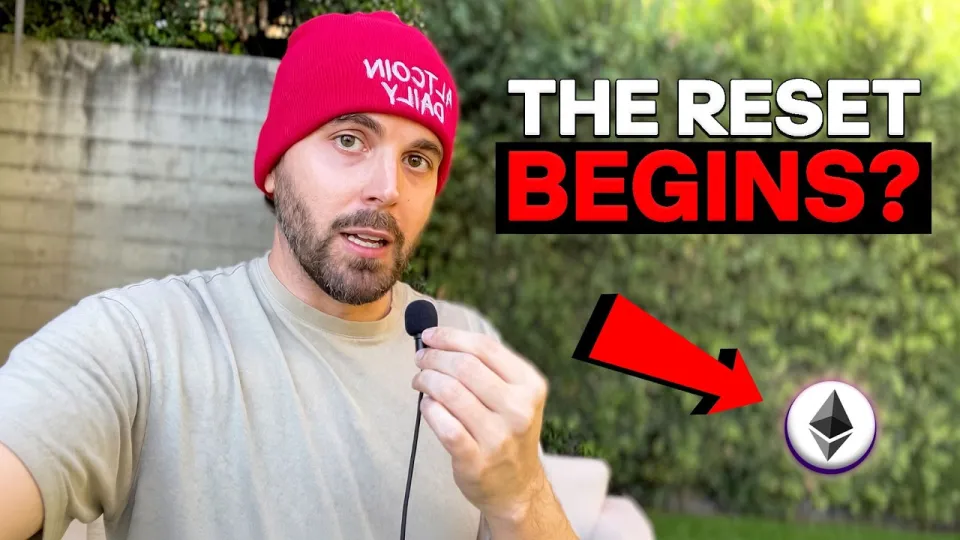
Video: Crypto Investors Are In Serious Trouble (market crash)
Want articles like this for your own video to promote it on YouTube and Google? Order them through the Telegram bot @sat_sit_bot. The bot writes and publishes the articles itself (with your YouTube video embedded) on popular topical websites (no ads). Try it free: 50 articles on us.
· based on the channel Altcoin Daily
A crypto market crash in 2026 is best understood as a drawdown inside a longer cycle, not the end of one: Bitcoin was trading around $80,707 as of October 24, 2026, and its five-year compound annual growth rate had fallen to just 5.78%. For investors, that means the pain is real but the math still favors patience over panic — and the same data that scares short-term traders is what long-term holders use to average down. Altcoin Daily's breakdown of the selloff, plus the merch store at the Altcoin Daily shop, frames the moment as one of the more uncomfortable stretches of this cycle.
What the crypto market crash actually looks like right now
The headline number is the one every holder checks first: Bitcoin at roughly $80,707, with a five-year CAGR of 5.78% as of October 24, 2026. That CAGR figure matters more than the spot price, because it tells you how much of the earlier bull run has already been given back in annualized terms. A five-year return in the high single digits is barely better than a savings account, and that is exactly the argument bears are using.
The second layer is altcoins. Bitcoin dominance tends to rise when risk appetite falls, and the altcoin segment absorbs the damage first. The video's discussion of Tom Lee and his views on Ethereum treasury vehicles such as BMNR shows how institutional ETH exposure is now part of the crash conversation, not a side note. When a single company's Ethereum holdings become a market-wide talking point, the market is pricing policy risk, not just token fundamentals.
Why investors feel this crash differently than previous ones
This drawdown hits differently because a large share of the market bought in near the top and has never sat through a full cycle. The complaints in the comments are consistent: portfolios are red, conviction is being tested, and people want to know whether the people who called the last bull run are still going to be around for the next one. That is a fair question — the cycle has been long enough that audience fatigue is now a market signal in its own right.
The buy-the-dip case and its limits
The strongest argument for buying now is mechanical: crashes compress prices faster than fundamentals deteriorate, so anyone with dry powder and a multi-year horizon gets better entries. That is the logic behind the "more time to buy and average down" position, and it is not wrong — it is just incomplete. Averaging down only works if you have cash left and if the asset survives, and both conditions are harder to meet when the drawdown drags on for months.
A practical framework for this phase looks like this:
- Decide your total allocation to crypto before you buy anything, and write it down.
- Split the remaining cash into at least four tranches rather than deploying it in one order.
- Set price levels or dates for each tranche in advance so the decision is not made in the middle of a red candle.
- Keep the long-term core untouched and treat altcoin positions as the speculative sleeve.
- Track your five-year CAGR, not your weekly P&L — the 5.78% figure is the honest scoreboard.
The $1,000 SOL by 2028 target that circulates in the community is a good example of how to think about this: it is a thesis about adoption and time, not about what happens next week.
Is this a crash or normal market manipulation?
A meaningful part of the audience rejects the word "crash" altogether and calls the move normal manipulation — the kind of liquidity sweep that happens before every leg up. There is no way to prove intent, but there is a testable difference: manipulation reverses quickly and leaves structure intact, while a genuine regime change produces lower highs across multiple months. Watch whether Bitcoin reclaims its prior range within a few weeks or keeps printing lower highs. The answer to that question decides whether the dip-buying thesis is early or wrong.
Common questions and doubts from crypto investors
Three themes dominate the discussion around this selloff. First, whether the current bull cycle is the last one for the analysts covering it — a retirement question that says a lot about how exhausted the audience is. Second, whether altcoin portfolios should be disclosed so viewers can judge the calls against real holdings; transparency is the recurring demand. Third, how long-term holders should behave when they are not checking prices at all — one viewer described going two weeks without logging in, keeping investments long term and redirecting cash toward making daily life more comfortable instead.
That last approach is worth taking seriously. For many holders the correct move in a drawdown is not a trade at all: it is deciding that the position size was already right and that new money belongs somewhere else for now. There is no rule that says cash must be deployed during a crash.
Where to follow the coverage and what you get
Altcoin Daily publishes the market breakdowns, guest commentary and cycle analysis referenced here, and the channel's store is the one link tied to the video: Altcoin Daily merch store. Everything else in this article comes from the price data and the arguments circulating in the community, not from a paid product.
The bottom line for holders in this drawdown
A crash at Bitcoin $80,707 with a 5.78% five-year CAGR is a test of process, not of prediction. Investors who set allocation limits and tranche sizes in advance are in a very different position from those deciding in real time while watching red candles. The most useful takeaway from Altcoin Daily's breakdown is that the cycle is still being debated by the people who cover it daily — and that patience, cash reserves and position sizing matter more right now than any single price target. If you want to support the channel that produced this analysis, the Altcoin Daily shop is where the merch lives.
Key takeaways
- Bitcoin traded at $80,707 on October 24, 2026, with a five-year CAGR of just 5.78%.
- The current drawdown is being framed by traders as a buying window rather than a cycle-ending event.
- Long-term holders are sitting out the volatility and saving cash instead of adding to positions.
- Altcoin Daily's breakdown ties the selloff to macro and regulatory uncertainty, with Tom Lee among the guests discussed.
- The $1,000 SOL by 2028 target remains a popular retail benchmark in the comments.
Source: Crypto Investors Are In Serious Trouble (market crash) · Markdown version
Questions & answers
How far has Bitcoin fallen in the 2026 crypto market crash?
As of October 24, 2026, Bitcoin was trading near $80,707, and its five-year compound annual growth rate had dropped to 5.78%. That CAGR is the more telling number, because it shows how much of the earlier bull run has been given back on an annualized basis.
Should I buy the dip or wait for a bigger drop?
Neither approach is inherently right, but deploying cash in tranches with pre-set levels removes emotion from the decision. Only average down with money you can leave untouched for years, and keep altcoin exposure as a smaller speculative sleeve rather than the core of the portfolio.
Is this a real crash or just market manipulation?
There is no way to prove intent, so judge by structure instead. A manipulation-style sweep reverses quickly and leaves the range intact, while a genuine regime change produces lower highs over several months. Watch whether Bitcoin reclaims its prior range in the coming weeks.
What do long-term crypto holders do during a drawdown?
Many simply stop checking prices and leave existing positions alone, redirecting new cash toward near-term needs instead of adding to crypto. That is a valid strategy: if your position size was already appropriate, the correct action during a crash can be no action at all.